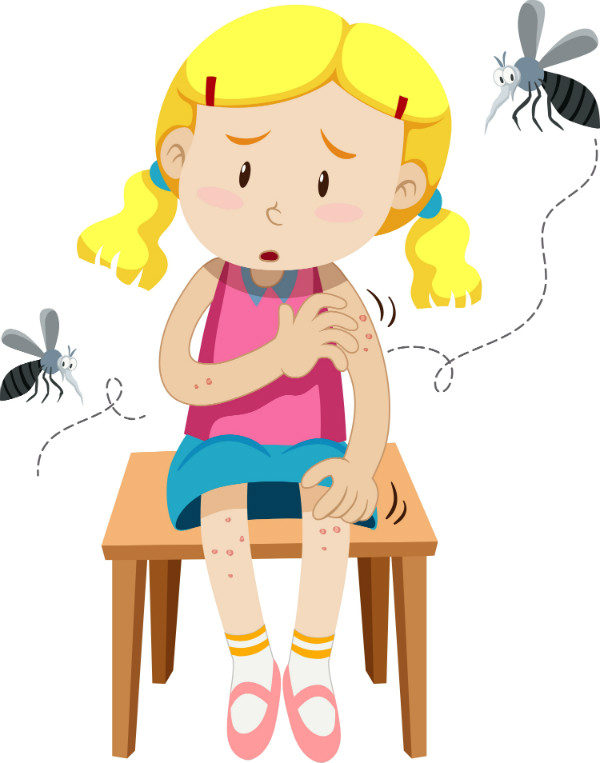
Summer is the season for insect bites . That’s why I think you might find these four fun facts interesting…
1. There are various REASONS why bugs bite us:

Mosquitoes feed on plant matter, but female mosquitoes need to supplement this diet in order to lay eggs. They obtain blood from various animals, including humans, which is why they bite us. When a female mosquito bites us, she sucks blood from the tiny blood vessels in our skin to feed and thus produce eggs. During this process, her saliva comes into contact with our body, which, in self-defense, produces a substance called histamine. Histamine causes the redness and itching typical of mosquito bites.
At this National Geographic link, you can watch some interesting videos on the subject.

Unlike mosquitoes, ticks and fleas feed exclusively on the blood of other animals (both males and females in this case), which is essential for their survival.
Female mosquitoes, ticks, and fleas bite to feed, while bees and wasps do so to defend themselves.

Hymenoptera (bees and wasps, among others), however, sting us as a means of self-defense, not as a means of survival. When they inject their stinger into our skin, they release venom that damages our skin and causes pain and inflammation. Unlike mosquito bites, bee or wasp stings rarely go unnoticed. The venom they inject is what causes potential allergic reactions, which are more common with hymenoptera than with mosquitoes.
2. After the bites, more “FALSE BITES” may appear:
This is a fairly common phenomenon that can cause some concern. Typically, after noticing a few bites that we can clearly identify, more and more similar-looking ones appear in the following days, but they’re located on other parts of the body (they may be far from the area of the initial bites). All the new bumps look like bites, but they aren’t actually bites; this is what we call papular urticaria or prurigo strofulus.
Papular urticaria is more common in people with atopic dermatitis, especially in children. It also appears that fleas are more likely to cause this condition than mosquitoes.
Papular urticaria is more common in children and is caused by a kind of “allergy” to the initial bites.
It is considered a hypersensitivity reaction to the first bites (a kind of “allergy”) that can lead to the continuous appearance of new bumps, which can last for months. If in doubt, it is important to consult a dermatologist, as treatment is relatively simple.
In this link you can see pictures of papular urticaria.
3. Bites usually occur in PAIRS
When you suddenly develop numerous bites without realizing there was a “bug” nearby, it can be cause for concern. It’s easy to wonder: Why did these bumps appear all of a sudden? Could it be something serious?
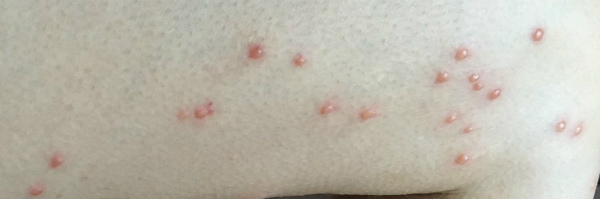
Well, if the bumps are clustered in pairs or in a line, it’s very likely that they’re insect bites. Few (if any) skin conditions can cause similar symptoms, so when we see this—especially if the bumps also itch—the diagnosis is very clear.
4. Insect bites can TRANSMIT DISEASES
In our environment, it is most common for bites to last a few days, with the itching gradually subsiding until the bumps disappear completely. In rare cases, bites from certain arthropods can transmit diseases.
Some mosquitoes can transmit diseases, especially in tropical areas
Perhaps the best known and most studied is the bite of the Anopheles mosquito, which can transmit malaria. The Zika virus, which is currently the subject of so much discussion, as well as dengue and chikungunya, are transmitted by the Aedes mosquito. Yellow fever is transmitted by Aedes or Haemagogus mosquitoes. The vast majority of these diseases are transmitted by mosquitoes endemic to tropical regions and are very rare in our country. Cases of these diseases in Spain generally involve people who have traveled to endemic countries. Therefore, to prevent them, it is essential to follow the specific recommendations for the country you are visiting.
Ticks can transmit Mediterranean spotted fever or Lyme disease, among others. These diseases do occur in Europe, so if you experience general malaise or a rash after a tick bite, it is important to see a doctor.
In conclusion…
In general, insect bites are minor. They appear as itchy bumps that last for a few days and then fade away. In some cases, the symptoms may persist due to papular urticaria. After being bitten by mosquitoes in tropical countries or by ticks, you should consult a doctor if you experience general discomfort or develop a skin rash.
