
The term “scabies” may sound like an ancient disease, something we no longer see in our environment. However, in recent years, the incidence of scabies, also known as sarcoptic mange, has increased significantly in our environment.
Scabies is caused by a microscopic mite that burrows under the epidermis, causing inflammation of the skin that leads to intense itching. Typically, the itching affects the body, sparing the head, and is especially intense at night. I wrote about it some time ago in this article.
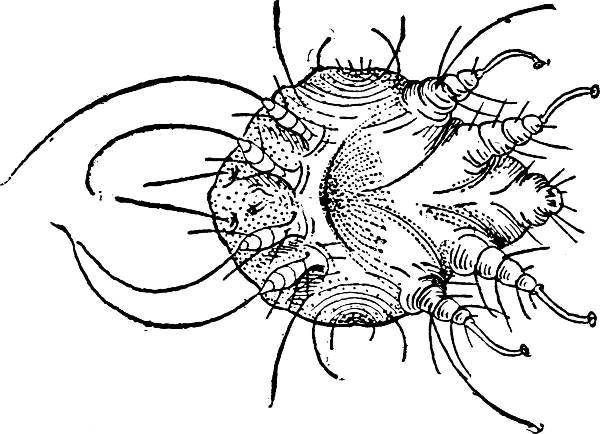
It is transmitted through close skin-to-skin contact, usually between cohabitants or sexual partners.
Scabies can be confused with other skin diseases that can also cause severe itching. This is not uncommon, as many professionals are not used to seeing this disease on a regular basis. However, it is worth considering in any case of sudden skin lesions.
What is happening with scabies?
As I was saying, we are seeing more cases of scabies than usual in our clinics. We are also struck by the fact that in many cases the treatment is not always effective, even though the method is well established in the guidelines.
Given this situation, the scientific community is considering two options:
- That the mite is developing resistance to the drugs we have available, in the same way that many bacteria do to widely used antibiotics. There are already some cases of resistance in other mites (such as lice) to permethrin, and therefore it is thought that sarcoptes (the cause of scabies) could develop this mechanism.
- The patient is not following the treatment properly.
Undoubtedly, we must bear in mind the first option, which is possible. However, the second option is most likely the reason why treatment is unsuccessful in many cases.
Why is the treatment not being carried out properly?
The characteristics of the disease make it difficult to treat correctly.
On the one hand, because it is easy for several people within the same household to suffer from it. On the other hand, because treatments must be repeated weekly, and this is not done in all cases. Topical treatments (permethrin) must also be applied meticulously, and this does not always happen.
In addition to all this, it is necessary to eliminate the mite from the living environment. If this is not done effectively, there will always be a certain risk of reinfestation.
Tips for effective treatment of scabies
1-Follow the guidelines given by your doctor.
You may have been prescribed oral treatment (ivermectin) or topical treatment (permethrin). In the case of permethrin, it is important to follow these tips: you must use the cream for a minimum of 8 hours (some sources indicate that 12 hours is better). Spread it over all areas of your body from the neck to the feet. Pay special attention to all folds, including between the fingers and around the nails. If you find that you do not have enough to cover your entire body, talk to your doctor. Otherwise, the treatment will not be effective. Wash it off in the shower and apply plenty of moisturizer to minimize skin irritation.

2-Repeat the treatment after 7-14 days.
This is important due to the life cycle of the sarcoptes scabiei mite. It is possible that at the time of the first treatment, the mite has laid its eggs and these will hatch in the following days. Repeating the treatment will eliminate the mites born from those eggs.
3-Eliminate the mite from your environment
On the same night as the first treatment, it is essential to wash previously worn clothing at a minimum temperature of 50º. This can be replaced by putting the clothes in the dryer. Shoes and delicate garments, as well as cushions, can be placed in plastic bags and left closed for at least 5 days (this will suffocate the mites). It is also advisable to vacuum large cushions, mattresses, and sofas.
4-Inform your household members and close/sexual contacts.
All members of a household must be treated, as well as other close contacts such as partners or sexual contacts. Treatment must be simultaneous. Otherwise, a “ping pong effect” may occur, in which some members of the same household are reinfected by those who have not yet been treated.
