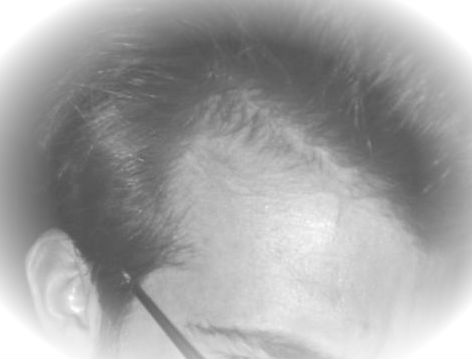
Androgenetic alopecia is a cause of hair loss that can lead to baldness on the top of the scalp. It is typical in men, but can also occur in women.

ANDROGENETIC ALOPECIA IN MEN
It is the most common form of baldness in men. Fifty percent of men have some degree of androgenetic alopecia by the age of 50, although it can begin as early as adolescence.
The factors involved in its development are male hormones and genetics. Androgenetic alopecia is more common in people with a family history of baldness. However, it is estimated that 15% of men will never develop it.
ANDROGENETIC ALOPECIA IN WOMEN

Androgenetic alopecia, also known as female pattern hair loss, is not uncommon. In the US, it affects 19% of white women. It frequently affects the crown and upper scalp, differing from androgenetic alopecia in men in that the hairline (the hairline on the forehead) is not lost and total hair loss is rarely seen.
It is more common in postmenopausal women, although it can begin as early as puberty.
The relationship with male hormones (androgens) is unclear, as many women with androgenetic alopecia do not have elevated levels of these hormones. There is also a certain genetic influence.
But HOW DOES THIS HAPPEN?
What underlies both types of androgenetic alopecia is what is known as “hair follicle miniaturization.” Let me explain: hair in people with androgenetic alopecia falls out just like it does in people without it. In people without this problem, the hair that has fallen out grows back with the same strength and thickness as its “predecessor.” However, in people with androgenetic alopecia, the hair grows back a little finer and more fragile than in its previous “life.” It grows back over months or years and falls out again. In the next cycle, it will be a little finer, and so on, until it becomes almost imperceptible or disappears.

Androgenetic alopecia cannot be cured, but there are treatments available to prevent it from progressing.
The harsh reality of androgenetic alopecia is that it cannot be cured, and it is difficult to regrow hair that has already been lost. There is no such thing as hair growth products :(. The good news is that there are treatments that help prevent it and stop it from progressing, as well as cosmetic or surgical solutions to address reduced hair density. I will discuss all of this in other posts, which need to be paced out… :)
