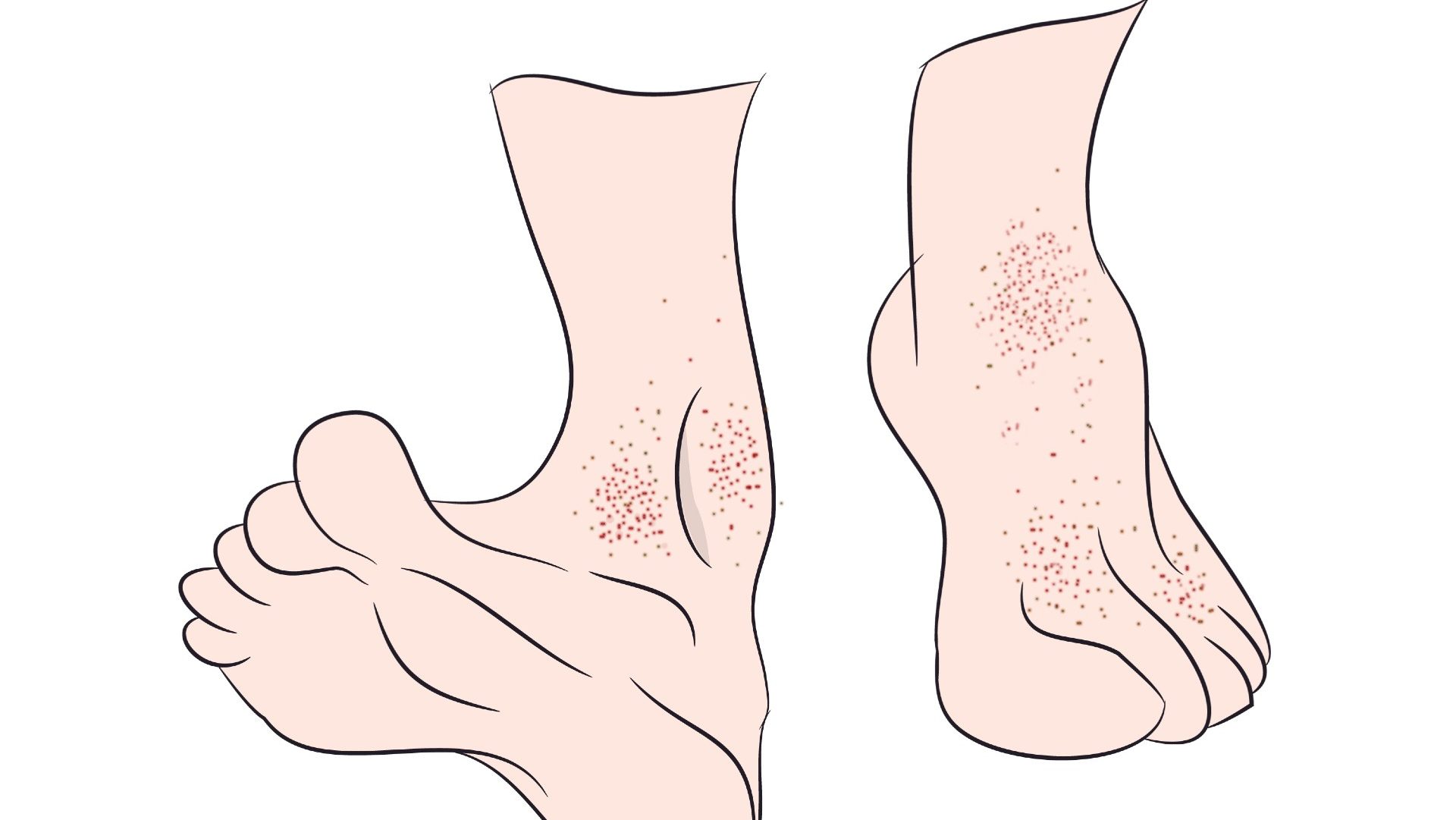
TMaybe you came across this article because you have small red spots on your skin—or some that are more brown.
You were probably surprised when you noticed them, because you haven’t bumped into anything, and besides, they don’t itch or hurt. But what are they? Why did they appear?
What are pigmentary and purpuric skin dermatosis?
Also known as capillaritis, pigmentary and purpuric dermatoses (PPD) are a group of benign skin rashes characterized by numerous small, blood-red spots that eventually develop into brown patches. They are different from ruby spots, which you can read about in this article.
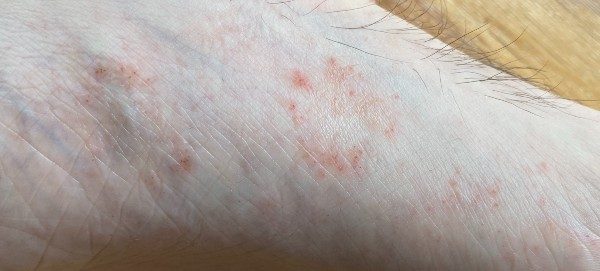
They may feel slightly itchy, but unlike bruises, they don’t hurt. They most commonly appear on the legs or feet of adults, although they can also appear in children.
Why do pigmentary and purpuric skin conditions occur?
Various possible causes for the onset of PPD have been suggested. I will list them below, but the reality is that none of them has been fully proven. In most cases, we are left wondering why it occurred.
The proposed possible causes are:
- poor circulation
- intense exercise
- spending many hours on one’s feet
- infections
- alcohol consumption
- certain medications: DPP has been linked to many medications from various classes.
- chemical exposure
- systemic diseases
How is pigmentary and purpuric dermatosis diagnosed?
Generally, dermatologists can diagnose this condition through a physical examination. Occasionally, we order blood tests to confirm that there are no issues with blood clotting or platelets.
In specific cases or when there is uncertainty, we usually take a skin sample (skin biopsy), which confirms the diagnosis.
How are pigmentary and purpuric skin conditions treated?
Unfortunately, there is no completely effective treatment for this condition. The scientific literature includes reports of cases treated with a wide variety of medications, but none have demonstrated clear effectiveness.
Since it usually causes no symptoms, the rash is often left untreated. In other cases, we recommend measures to promote venous return and prevent leg swelling, or topical corticosteroids to reduce skin inflammation.
Furthermore, although it may be a chronic condition, the spots often disappear on their own after a few weeks, months, or even years. For this reason, we generally opt for a wait-and-see approach.
Different names for this conditon…
Perhaps while reading this article, you’ve realized that this is exactly what’s happening to you; however, your doctor may have used a different term to diagnose you. Don’t be surprised. There are several types of DPP with rather unusual names—whose significance, in my view, is purely academic—which I’ll list below. For simplicity’s sake, they can all be grouped under the umbrella term DPP or capillitis.
The types of DPP are:
- Schamberg’s purpura
- Purpura annularis telangiectodes (Majocchi’s purpura)
- Gougerot-Blum’s pigmented purpuric lichenoid dermatitis
- Lichen aureus
- Eczematous purpura of Doukas and Kapetanakis
