I recently wrote a post about herpes zoster, commonly known as “shingles,” in which I discussed its causes and treatment.
However, if you have or have had shingles, you’re probably worried about how it will progress and whether it will continue to hurt for a long time.
You know that it initially presents as a peculiar pain in some part of the body that may resemble a headache or muscle discomfort. It’s also common to describe it as a burning sensation, itching, tingling, and marked skin sensitivity.

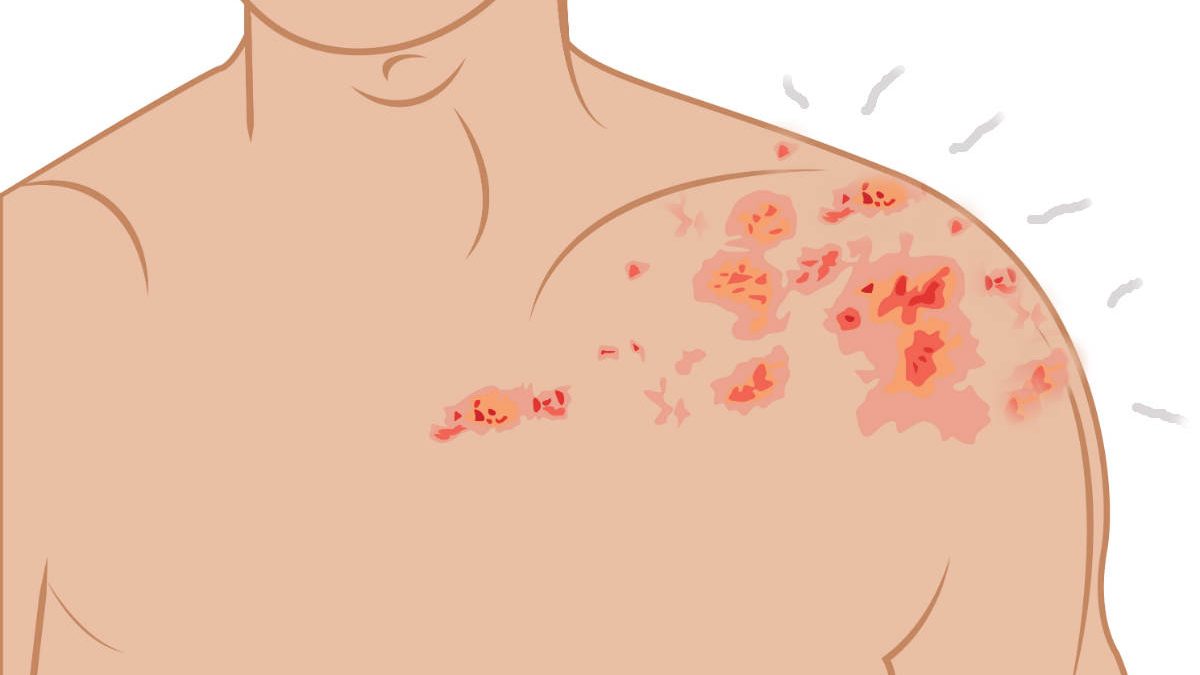
After a few days of this vague pain, shingles usually manifests as multiple bumps resembling small blisters (vesicles) that tend to cluster in a linear pattern. It can appear anywhere on the body.
Here you can see more pictures of shingles
This is the point at which a diagnosis is usually made and treatment is prescribed, which consists of:
- Oral antiviral (acyclovir, valacyclovir, brimonidine, famciclovir).
- Note: It’s not alwaays necessary. If you’re young, your doctor might not prescribe it, and that’s perfectly fine.
- Topical antivirals (Zovirax/acyclovir cream) are sometimes prescribed, but they aren’t effective.
- Some topical products to prevent secondary infection and dry out the blisters: antibiotic creams, compresses, sprays…
- Pain relievers to ease the pain.
And this is where you ask yourself: Now what am I supposed to do?
Scabs
Those small fluid-filled blisters dry out over the course of a few days. They then turn into black scabs, which are quite noticeable.
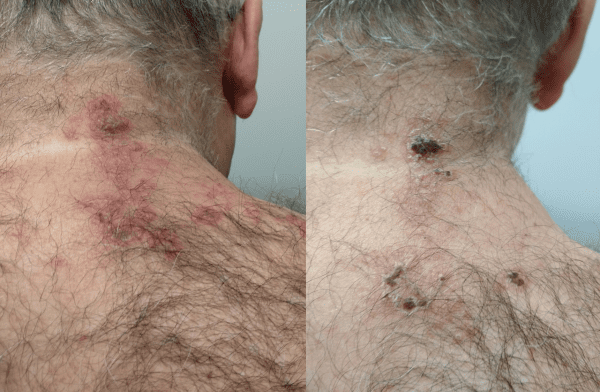
Little by little, they fall off, revealing an area of pink skin.
If you have dark skin, once the scabs have healed, a brown spot may remain on the affected area—a condition we call post-inflammatory hyperpigmentation.
This spot usually fades over time, but it may take several months to do so.
Intense pain
It doesn’t always happen, but the pain from shingles can be very intense. It’s normal for it to interfere with physical activity, sleep, or appetite.
This pain usually begins before the blisters appear on the skin. However, it doesn’t go away once the skin heals; rather, it’s normal for it to persist over time. We consider a duration of three months from the appearance of the blisters to be normal.
What if it lasts longer?
In that case, we call it postherpetic neuralgia, and it is a somewhat more complex condition that persists over time.
It is more common in older adults (it occurs in only 2% of those under 60) and in cases where antiviral treatment was started more than 72 hours after the appearance of the blisters.
This pain is treated with medications that are somewhat more specialized than standard pain relievers (gabapentin, amitriptyline, etc.). Treatment typically requires management by professionals specializing in pain management.
In conclusion…
If you’ve had shingles and experienced pain, the pain usually goes away within a few weeks after the blisters have healed.
If your shingles outbreak was very extensive, you started treatment late, or you’re over 60, you’re at slightly higher risk of developing postherpetic neuralgia (pain lasting longer than 3 months).
Any discoloration left by the outbreak will fade over time.
